
Introduction
Which platform features matter most when vetting remote developers? Three things, in roughly this order: a realistic coding environment that looks like actual work, a live pair-programming session where you watch someone think out loud, and a standardised scoring rubric so the team isn’t grading by vibes. AI-integrity controls come next, and they matter, but they rank below those three. As for the model (marketplace, dedicated team provider or direct hiring), pick the one whose trial period, replacement guarantee, time-zone overlap and pricing you can read in plain English before you sign.
That’s the short version. The long one is messier.
Most hiring teams still shop for platforms the way they shop for kettles: a feature list, a star rating, a quick glance at the price. Then six weeks later a “vetted” engineer can’t navigate a normal repository, and everyone is surprised. Vetting is a claim. Your job is to test the claim.
So let’s do that, properly.
Which Platform Features Signal a Well-Vetted Developer Pool?
Ignore the badge on the homepage. “Top 3%” means nothing until you know what the 3% passed.
What you want is evidence of stages. A decent pool has an application filter, a technical assessment, a live conversation and some sort of monitoring after placement. Skip any one of those and you’re trusting somebody else’s gut. Platforms that walk you through each stage, with pass rates, are rare enough that I treat transparency itself as a signal. Our own write-up on how IMO Talent vets developers for technical proficiency is one example of what a stage-by-stage explanation looks like.
Realistic Coding Environments
I’d pick a platform that feels like work, not a trivia contest.
Give candidates a cloud IDE with a multi-file repo, a real framework and package support. A giant bank of algorithm puzzles is mostly wasted money if it can’t show how someone handles a normal codebase, where the hard part is reading other people’s code, not inverting a binary tree. Independent reviewers keep landing on the same point, and 66% of developers prefer practical, real-world challenges over abstract puzzles, according to HackerRank’s developer skills report. Good candidates tend to be the ones who walk away from puzzle-heavy screens.
Live Pair Programming
A score is a number. A pairing session is a person.
Insist on a live session with a shared terminal, audio and video, maybe a whiteboard. Watch how they explain a fix, what they do when they’re wrong (everyone is wrong in the first ten minutes), and whether they ask a clarifying question before typing. For remote work this doubles as a communication test, and communication is where most distributed projects quietly die. Ask for it before the contract, not after.
Standardised Scoring Rubrics
Without a rubric, you get opinions. With one, you get something you can defend.
Look for benchmarked scoring, with percentile comparisons and the same criteria applied to every candidate. Then ask the platform to show you a sample scorecard. If they can’t, the “rigorous” screening lives in somebody’s head. ATS integration is handy at high volume, though it isn’t the feature that tells you whether someone can ship, so don’t let a slick dashboard buy your affection.
How Much Should AI Controls Influence Your Choice?
Somewhat. Not as much as the vendors would like.
Nearly every developer now uses an assistant, and 97% say they use AI tools in the same HackerRank data. Banning it in a test is a bit like banning calculators in an accounting interview. The sharper question is whether you can see how the work got done.
Session Playback and Telemetry
Transparent session playback beats a locked-down browser, every time.
Keystroke history, copy-paste tracking and recordings let a hiring manager verify independent work without treating candidates like suspects. You watch the first ten minutes, skim the rest, and the story tells itself. A solution pasted whole in one go reads very differently from one built, broken and rebuilt.
Human-Plus-AI Testing
Better still, test the assistant use itself.
Let the candidate prompt, review and debug alongside a model, then judge the judgement. This matters because output volume is a poor proxy for quality. GitClear’s analysis of hundreds of millions of commits suggests heavy AI users write far more code but also produce higher churn and duplicated blocks, so a developer who accepts every suggestion can look brilliant on a line count and terrible in six months. You want someone who edits the machine, not obeys it.
Proctoring Trade-Offs
Webcam checks, ID verification and plagiarism detection are sensible for high-volume screening. Aggressive browser lockdown is a different animal. It tanks completion rates, and your best candidates (the ones with options) are exactly who walk. A proctoring circus is a bad trade. Choose light-touch integrity checks plus playback, and save the heavy machinery for volume roles where you genuinely can’t review sessions by hand.
Which Platform Model Fits Your Hiring Needs?
Three models, three different bargains. Mixing them up is how people end up paying agency rates for freelancer-grade vetting.
Marketplaces
Think Upwork, Fiverr or freelancermap. Huge reach, fast proposals, low barriers. Also wildly uneven quality, because the platform mostly provides the storefront and you do the vetting. That’s fine for a defined task or a short project. It’s risky for a core product. One more wrinkle: the share of respondents working as solo freelancers more than doubled from 4% to 10% in Stack Overflow’s survey, which means more individuals selling alone, with no team behind them when they vanish.
Dedicated Team Providers
Here the provider screens, employs or contracts the engineers, and often handles payroll, equipment and replacement. You pay more per head and get a bench behind each person. For ongoing roadmap work it usually wins. If you’re weighing specialist networks, the platform-by-platform comparison lays out how they differ.
Direct Hiring
You recruit, you vet, you employ. Maximum control, minimum safety net, slowest ramp. It suits companies with an engineering lead who has time to interview properly and a legal setup for cross-border contracts. Plenty don’t, and discover it mid-process.
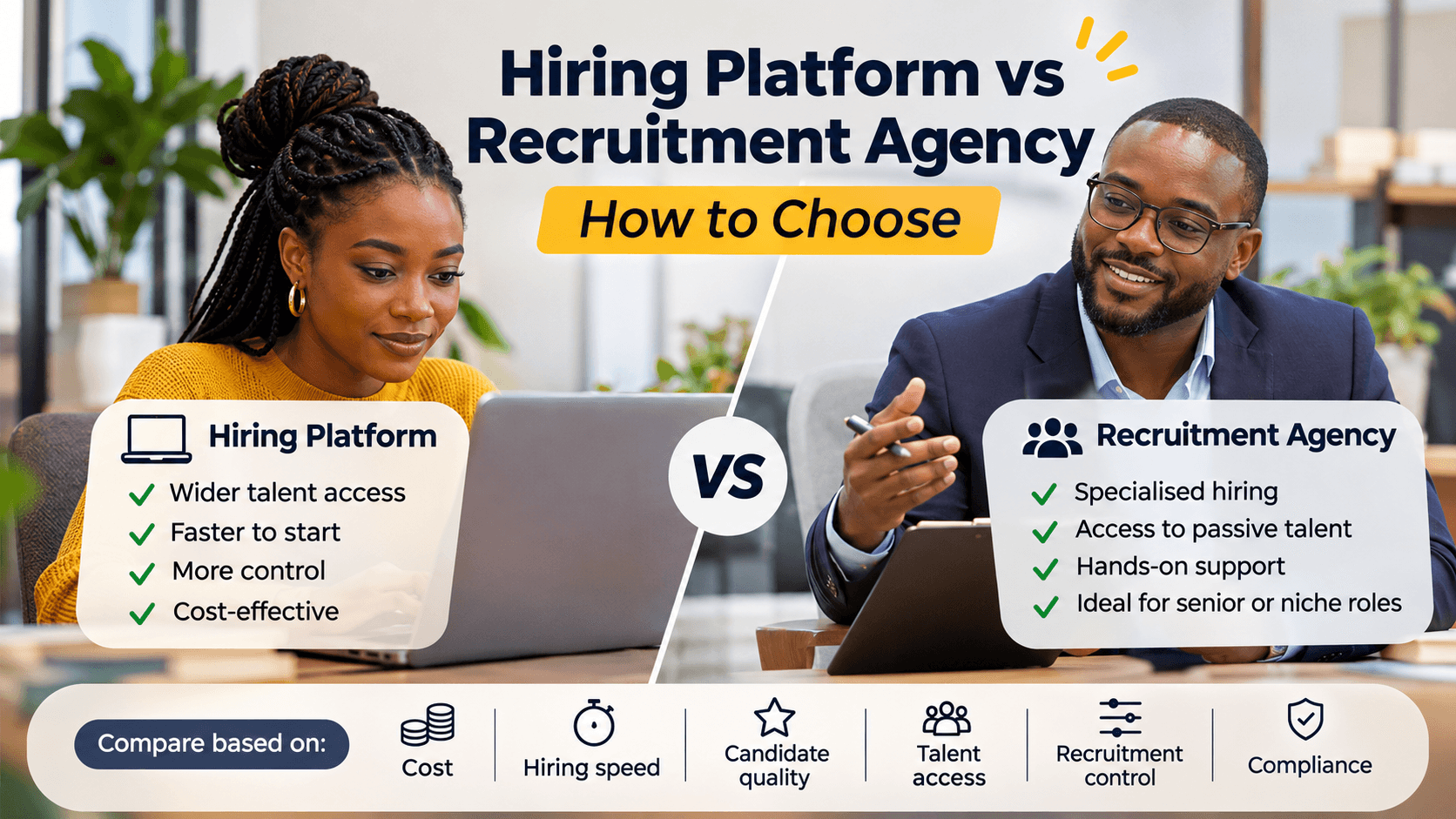
Compare Models Against Trial, Replacement and Pricing Terms
Features get you to a shortlist. Terms decide who you sign with.
|
|---|
Read the replacement clause slowly. “Replacement” can mean a free swap in days, or a fresh search where you wait and keep paying. Ask whether the trial is paid, whether the clock restarts after a swap, and whether the quoted rate includes every fee. Transparent pricing means you can predict next quarter’s invoice without a phone call. For a wider view of the field, this comparison of recruitment agencies versus hiring platforms is worth a skim.
Check Time-Zone Overlap and Communication Standards
Overlap beats proximity. A developer six hours away with a four-hour shared window will outperform one who is “nearby” and offline when your standup happens.
Ask for a guaranteed minimum overlap in writing, and ask how the platform handles async work: written updates, recorded demos, pull request etiquette. Around 35% of developers work fully remote, so good async habits are common among serious candidates, and their absence says something. For European and UK teams, West African and East African engineers often sit comfortably inside a working day, which is a real advantage over far-flung alternatives. Our guide to hiring in Nigeria’s tech hub goes into the practicalities.
Run This Due Diligence Checklist Before Committing
Before you sign anything, work through these:
Compliance: contractor classification, IP assignment, data protection (UK GDPR if you’re handling UK data) and local tax handling.
Delivery track record: named references from similar projects, not testimonials on a landing page.
Security hygiene: how contributors handle credentials, and whether secret scanning is part of their normal workflow.
Retention: how many placed engineers stay beyond a year, and what the provider does to keep them learning.
Exit terms: notice periods, IP handover and what happens to your code if the relationship ends.
That last one gets skipped constantly. It shouldn’t.
A Simple Decision Framework by Hiring Scenario
Once you’ve cleared the checklist, use this framework to choose between marketplaces, staffing partners and freelance platforms:
Project size: Small, well-scoped projects suit freelance platforms with escrow and dispute protection; multi-engineer, multi-month builds favour staffing arrangements with continuity guarantees.
Budget: If cost per day is your binding constraint, marketplaces win on transparency — but budget for your own vetting and management overhead. If budget flexibility matters more than rate, staffing firms absorb sourcing and screening cost.
Urgency: Need someone in a week? Marketplaces and freelance platforms with ready pools WIN. Need a stable team in a quarter? Staffing firms and talent networks justify the longer lead time with better fit.
Team maturity: Mature teams with existing tech leads can direct freelancers successfully. Early-stage or first-time remote hirers get more defensive value from staffing partners that provide management support and replacement guarantees.
Score each option against these four factors plus the checklist above; the platform that fits your weakest constraint — not your strongest — is usually the right choice.
Spot the Red Flags That Should End a Conversation
Some signals are cheap to spot and expensive to ignore. A platform that won’t describe its screening stages. Pass rates quoted with no definition. Pressure to sign before a trial. A “guarantee” with five paragraphs of exclusions. Candidate profiles that look suspiciously polished and identical. No named references, ever.
Then there’s the quiet one: a sales team that can’t answer a technical question and keeps promising to “circle back.” If the people selling the talent can’t explain how it’s tested, I wouldn’t expect the talent to be tested.
What Should You Ask Next When Shortlisting Platforms?
Start with the awkward questions. What percentage of candidates fail your live session? Can I see an anonymised scorecard? Who covers the gap if an engineer leaves in week three? How do you monitor performance after placement, and who sees the results?
Then ask for a pilot. One small project, two weeks, real code. You’ll learn more from that than from any demo. When you’re ready to compare options side by side, the guide to how IMÒ stacks up against Proxify and Toptal gives you a worked example of the questions in action.
FAQ
Which single feature matters most?
A realistic coding environment paired with a live pairing session. Together they show how someone works and how they talk about it.
Are marketplaces always a poor choice?
No. For a bounded task they’re quick and cheap. They’re a poor fit when you need long-term ownership and the vetting burden lands on you.
How long should a trial be?
One to two weeks of real work is usual. Shorter hides problems, longer starts to look like a contract.
Should I ban AI during assessments?
I wouldn’t. Make it visible and assess how it’s used. Playback and copy-paste tracking do that without wrecking completion rates.
What’s the biggest hidden cost?
Replacement terms. A free swap is cheap; a restarted search while you pay for an empty seat isn’t.
Conclusion
Vetting is evidence, not branding. Favour platforms that test on real code, watch candidates work live, score against a rubric and show you their integrity controls without turning the process into an interrogation. Then match the model to your appetite for risk, read the trial and replacement terms like a lawyer, and confirm the time-zone overlap in writing.
Run the checklist. Respect the red flags. And if you want to see what a vetted pool looks like in practice, start with the IMÒ Talent value proposition and put it through your own checklist. It should be able to take the heat.