
Every founder I’ve spoken to has, at some point, stared at a hiring budget spreadsheet and felt a bit sick. Here’s the honest answer up front: the cheapest talent platform isn’t the one with the lowest headline fee, it’s the one that matches your hiring frequency, your task complexity, and your team’s actual capacity to vet people yourself. For most bootstrapped startups, that means a blend of Upwork or Fiverr for short bursts of work, paired with a lightweight applicant tracking system once you’re hiring more than once a quarter. Get that combination wrong and you’ll bleed money on platform fees, agency commissions, or worse, bad hires that cost you months of runway to unwind.
I’ve watched founders burn through six weeks of hiring budget on a recruitment agency that charged a placement fee north of 20%, only to land a candidate who quit within the probation period. I’ve also watched a two-person startup use a $0 Fiverr gig to get a logo done in three days flat. Both are “hiring.” Both sit on wildly different ends of the cost and risk spectrum. The trick isn’t picking the fanciest tool, it’s understanding what each platform is actually built for, and matching that to where your startup sits right now.
What Makes a Talent Platform Affordable for Startups?
Affordability isn’t just the sticker price. It’s the total cost of getting someone hired, onboarded, and productive, minus the hours your founding team spends babysitting the process. A platform that looks cheap on the homepage can quietly become expensive once you factor in contract initiation charges, currency conversion losses, or the sheer number of hours spent sifting through unqualified applicants.
Fee Structures and Hidden Costs
Most freelance marketplaces use a layered fee structure, and startups get caught out because they only read the headline number. Upwork’s client-side fees typically sit in the 3% to 5% range on the basic plan, but there’s often a small contract initiation cost stacked on top, something worth checking against the platform’s own breakdown of what clients actually pay before you commit a project brief. Fiverr, by contrast, folds its fee into a flatter buyer charge, closer to 20% built into pricing tiers rather than itemised separately. Freelancer.com sits somewhere in between, with a baseline closer to 10%, though the bidding-war nature of the platform means you might spend more in time cost than in actual fees, chasing down proposals that don’t match the brief.
Recruitment agencies play an entirely different game. Agency fees typically land between 15% and 25% of a candidate’s first-year salary, sometimes higher for niche technical roles. That’s not a criticism of agencies, they earn it through vetting and speed, but for early-stage startups watching runway like a hawk, those upfront fees can wipe out a month of payroll for a single hire.
Free vs Paid Plan Trade-offs
Free tiers exist on almost every recruitment tool worth mentioning, and I’d argue most startups underuse them out of habit rather than necessity. A free applicant tracking system might cap your active job postings or limit you to a handful of users, but if you’re a five-person team hiring your first two roles, that ceiling probably won’t bother you. The trade-off usually shows up in support quality, integration depth, and how much manual admin you’re stuck doing yourself. Paid plans buy you automation: resume parsing, interview scheduling, pipeline analytics. Whether that’s worth the monthly pricing depends entirely on how many requisitions you’re running at once.
Scalability Without Price Jumps
The nastier trap is scalability. Plenty of recruitment software prices itself attractively for a team of five, then jumps to enterprise pricing the moment you cross ten or twenty seats. I’d tell any founder to ask, before signing anything, what happens to the bill at double your current headcount. Some ats platforms scale gently with user-based pricing; others cliff-edge you into a completely different tier with features you didn’t ask for.
Which Features Matter Most on a Startup Budget?
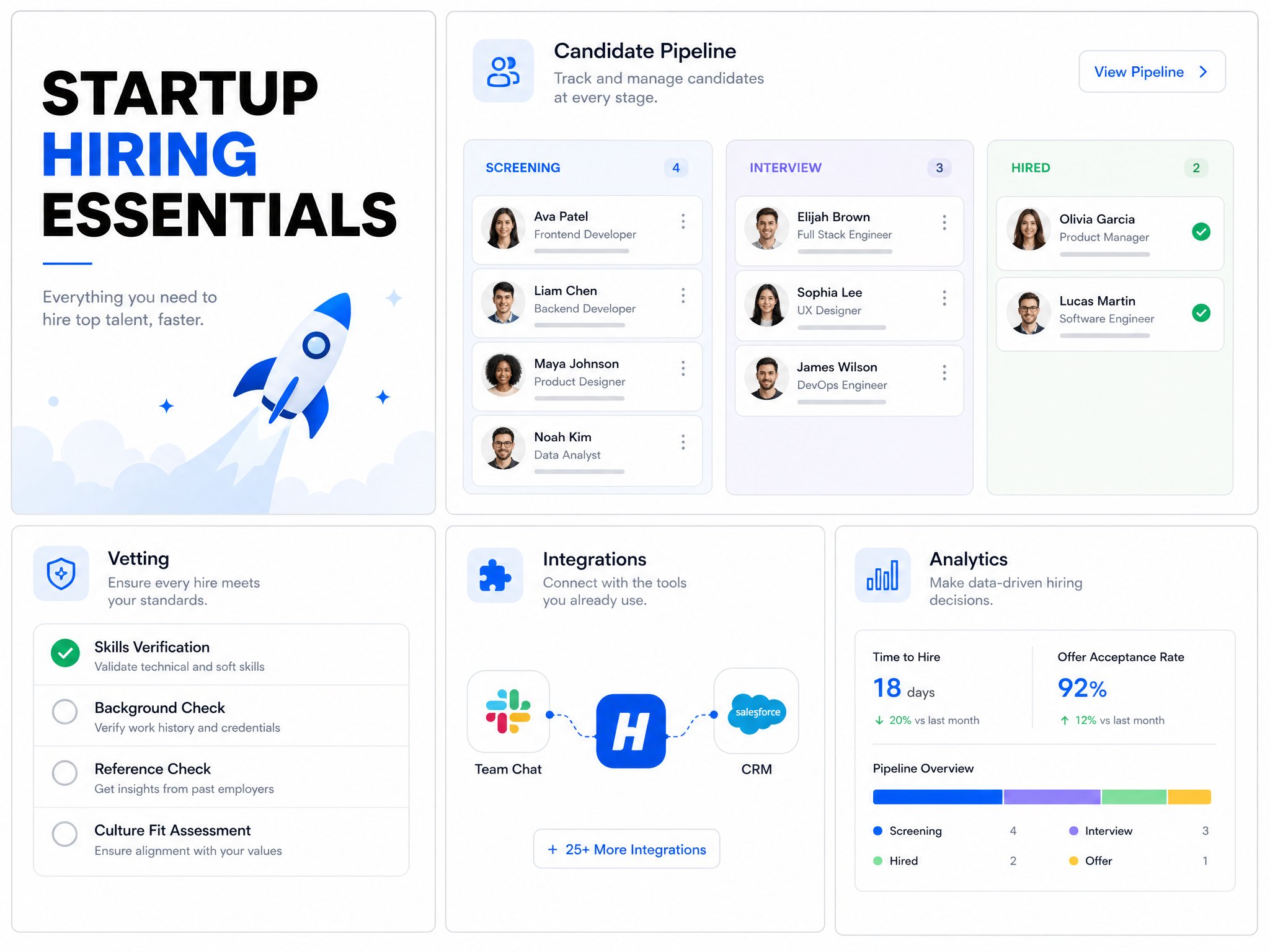
Startups don’t need the full enterprise suite. You need the handful of features that actually reduce time-to-hire and prevent costly mis-steps, nothing more.
Applicant Tracking and Screening Tools
A basic applicant tracking system that lets you tag, filter, and move candidates through stages without spreadsheet chaos will save more hours than any fancy AI recruiting tools add-on. Screening automation, even simple keyword filters, cuts down the manual slog of reading a hundred CVs for a role that needed maybe fifteen genuine contenders.
Integration with Existing CRM or Workflow
If your team already lives in Slack, Notion, or a CRM for sales outreach, your recruitment tech stack should plug into that rather than forcing a parallel system nobody checks. I’ve seen hiring pipelines quietly die because the ATS lived in a browser tab nobody opened after week one.
Vetting and Skills Verification Options
This is where platforms genuinely diverge. Some marketplaces offer built-in skills tests or portfolio verification; others leave vetting entirely to you. For technical hires especially, a platform offering some form of pre-vetted talent pool, even a shallow one, saves the guesswork that a raw bidding marketplace can’t offer.
Compare Upwork, Fiverr and Freelancer.com for Startups
These three dominate the affordable end of the market for good reason, and the freelance market has grown enormously around them, now valued somewhere near $7.65 billion globally and expected to nearly double by 2030 according to recent freelance platform statistics. Upwork alone commands the majority share of that spend.
Platform | Best Fit | Typical Fee Range | Payment Structure |
|---|---|---|---|
Hourly or ongoing contracts | 3%-5% client fee, plus small contract initiation cost as detailed in Upwork’s own fee guide | Weekly billing, escrow-protected | |
Fixed-price micro tasks | Flat buyer fee built into gig pricing | Pay per gig, upfront | |
Competitive bidding on smaller projects | Baseline near 10% | Milestone payments |
Best Fit for Task Type and Timeline
Upwork suits you when the work is ongoing, think a part-time designer for three months, or a developer on retainer. Fiverr is built for the one-off: a logo, a video edit, a landing page copy pass. Freelancer.com works best when you’ve got a well-defined brief and want competitive pricing through open bidding, though you’ll need patience to sift proposals.
Fee Ranges and Payment Terms
Upwork’s structure, once you dig into the actual percentages, ranges from 0% to 15% depending on the contract type and payment method, with Connects (the platform’s bidding currency) priced at roughly $0.15 each. Fiverr keeps things simpler with its flatter, higher fee baked into the catalogue price, which some founders actually prefer because there’s no surprise at invoice time.
When Bidding Volume Becomes a Burden
Here’s the bit nobody warns you about. Post a job on Freelancer.com or even Upwork with a generous budget, and you’ll get flooded, sometimes eighty or ninety proposals within a day. That sounds like abundance until you’re the one reading them at 11pm. Heavy inbound volume demands manual vetting time that a smaller, curated platform would have handled for you upfront, which is worth weighing against the fee savings.
How Do Freelance Marketplaces Compare to Full ATS Software?
Marketplaces and applicant tracking systems solve different problems, and conflating them is where a lot of early hiring strategy goes wrong.
Freelance Marketplaces for Short-Term Gigs
Marketplaces are transactional by design. You post, you hire, the relationship often ends when the project does. Great for one-off design work, translation, or a burst of dev support before a launch.
ATS Platforms for Ongoing Hiring Pipelines
Once you’re hiring repeatedly, building a proper recruitment funnel across multiple roles, a full ats earns its keep. It tracks candidates through structured stages, keeps interview notes centralised, and prevents the “wait, did we already reject this person?” conversation that plagues fast-scaling teams. This is also where a platform-by-platform comparison of vetted networks becomes genuinely useful reading before you commit budget.
Choosing Based on Hiring Frequency
My rule of thumb: if you’re hiring fewer than twice a quarter, stick with marketplaces and manual spreadsheets. Cross that threshold and an applicant tracking system starts paying for itself in saved admin hours alone.
What Are the Best Low-Cost Alternatives Beyond the Big Three?
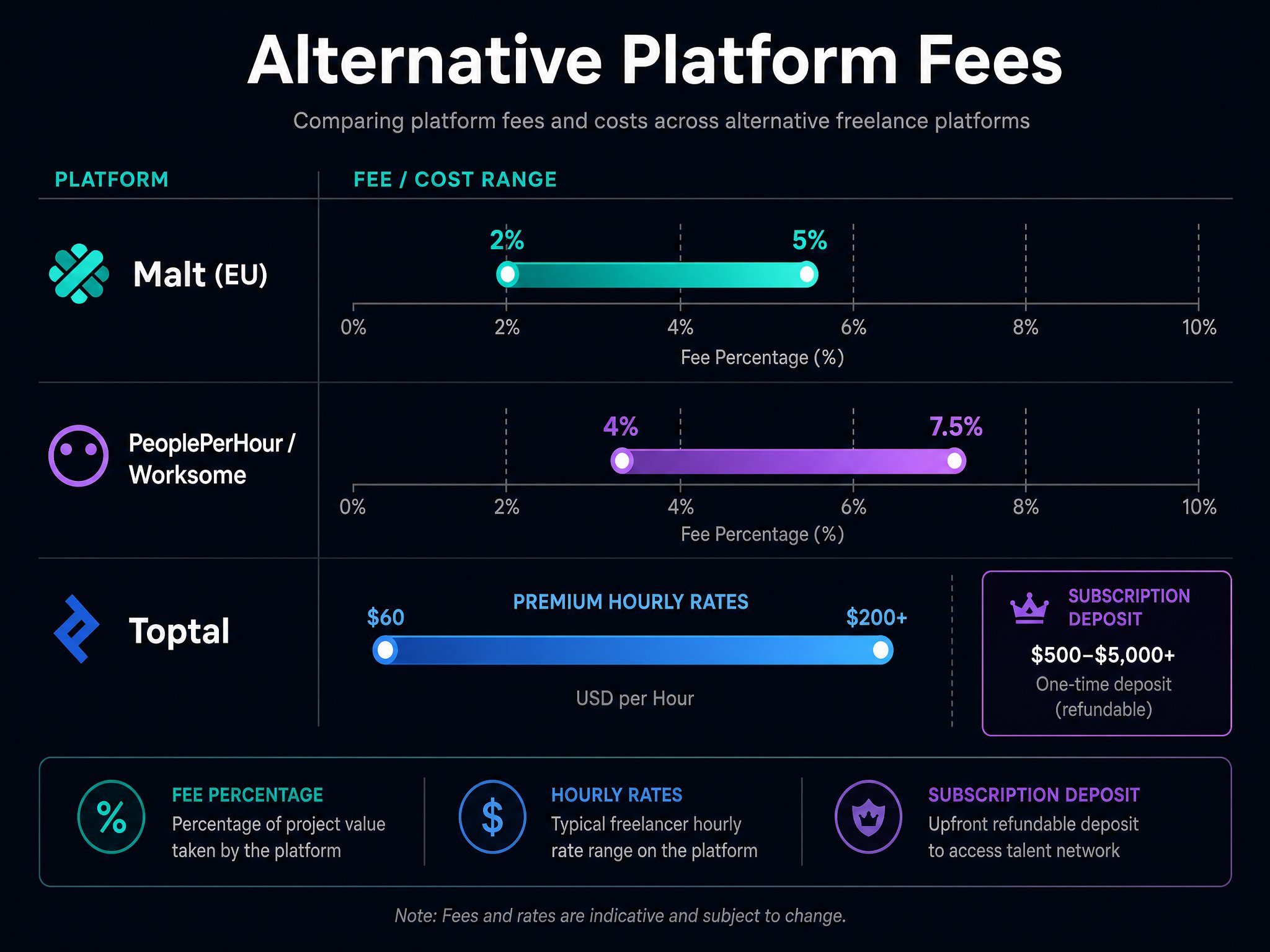
The market’s bigger than Upwork, Fiverr, and Freelancer.com, and startups outside the US should know that regional platforms often undercut the giants meaningfully. European options like Malt scale their commission down to 2-5% for repeat clients, while Worksome and PeoplePerHour sit in the 4-7.5% range according to a comparative breakdown of European versus American freelance platforms.
Malt: strong for EU-based freelance hires with lower long-term commission
PeoplePerHour: solid middle ground for UK-based project work
Toptal: premium vetted network, but expect senior hourly rates from $60 to over $200 depending on specialism, plus a subscription and deposit structure explained in Toptal’s own cost documentation
Recruitment CRM tools built for lean teams, rather than enterprise SaaS suites, are worth testing too. And don’t sleep on free tools. A well-run spreadsheet paired with a free-tier ATS and a bit of discipline can outperform an expensive recruitment management system that nobody on your team fully understands. For a broader menu of these, this rundown of budget-friendly hiring alternatives is worth a proper read before you commit to a subscription.
How Should Startups Evaluate Cost Per Hire?
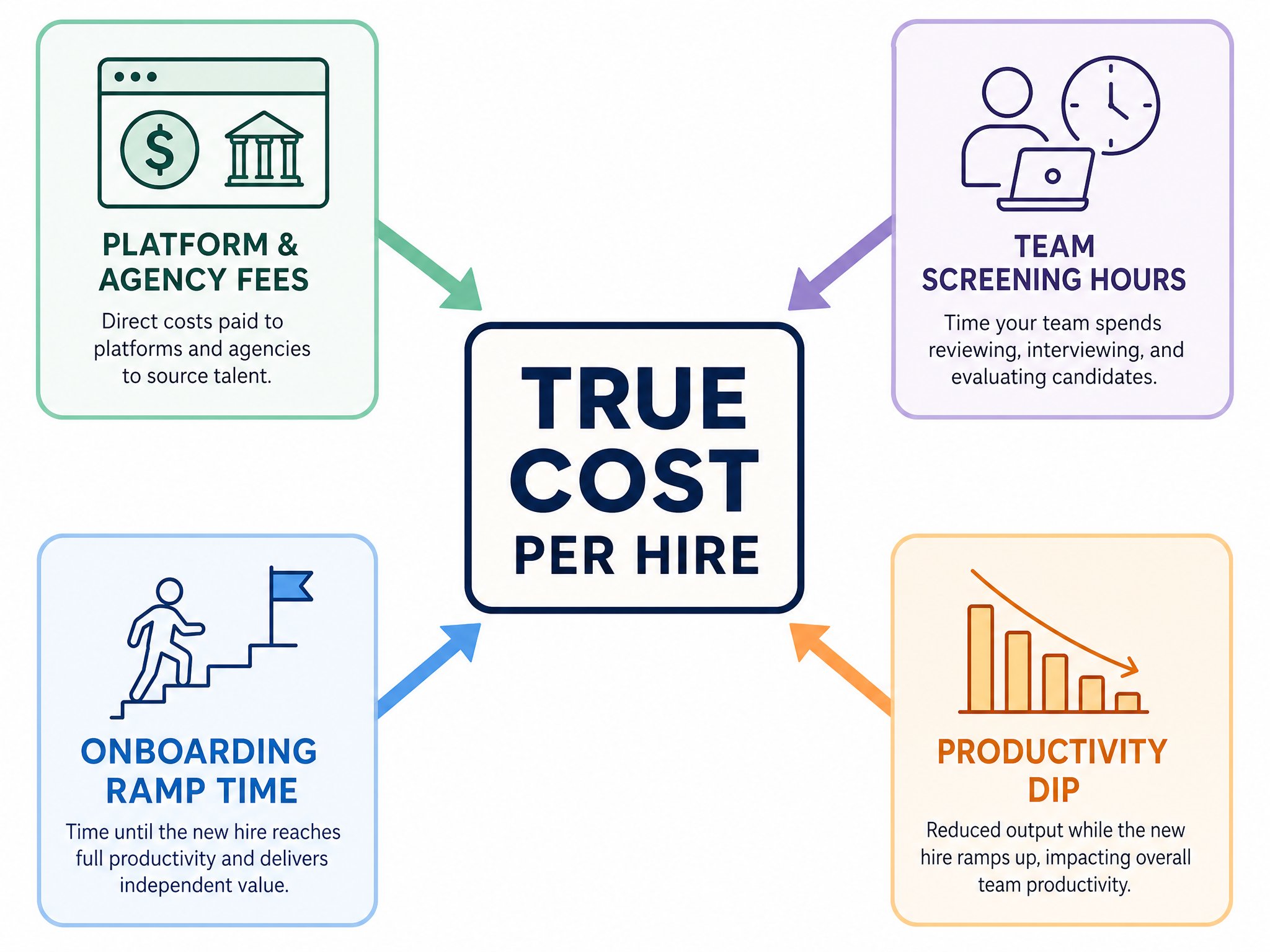
Calculating True Cost Beyond Platform Fees
Cost per hire isn’t just the invoice from the platform. Add in the hours your team spent screening, the onboarding ramp time, and any productivity dip while the new hire gets up to speed. A framework for comparing bulk remote hiring costs across platforms is genuinely helpful here if you’re scaling a team rather than filling one seat.
Reducing Cost Per Hire Without Cutting Corners
Reducing cost doesn’t mean picking the cheapest freelancer available. It means tightening your screening process so fewer bad hires slip through, and it means being honest about which roles genuinely need a vetted, premium network versus which ones can be filled through open marketplace bidding.
Setting a Realistic Hiring Budget Early
Set the budget before you start browsing platforms, not after. I’d rather a founder walk in knowing they’ve got, say, £2,000 for a design contractor and £6,000 for a part-time developer, than discover those numbers reactively once proposals start rolling in.
How Do You Hire Skilled Talent Without Big-Name Bias?

Brand-name bias is one of the more expensive habits early founders fall into. I’ve hired capable engineers from towns nobody’s heard of who brought more grit and resilience than candidates from flashier backgrounds. The fix is structural: run a short, high-bandwidth trial project, pair the candidate with someone on your team for a real task, and judge on practical problem-solving rather than the logo on their CV. A six-week product sprint with a measurable outcome tells you more than a year of vague “great collaborator” language on a resume ever will.
What Role Should Remote Hiring Play in Platform Choice?
Remote-first hiring isn’t a nice-to-have anymore, it’s close to essential for cost control. Widening your search beyond your home city, or even your home country, multiplies your talent pool without multiplying your salary bill. The trade-off is that remote teams demand rigour: clear async handoffs, visible documentation, and a rhythm of updates that doesn’t rely on everyone being in the same room. Platforms built for remote hiring, rather than adapted for it, tend to bake that structure in from the start, which matters more than people expect once a team crosses six or seven people.
When Does a Recruitment Agency Beat a Self-Serve Platform?
Agencies earn their fee when the role is senior, the search is genuinely hard, or your own team simply doesn’t have bandwidth to run a proper process. Paying a premium for a technical recruitment agency to fill a niche staff engineer role makes sense when a bad hire would cost you three months of runway. But for most early roles, a founder-run process using a lean recruiting tool and a bit of discipline outperforms an agency on both cost and speed. The agency route only wins once your own team’s time becomes the scarcer resource than cash.
FAQ
Is Upwork or Fiverr cheaper for a startup’s first hire? It depends on task type. Fiverr’s flat pricing suits fixed-scope work like a logo or short video edit, while Upwork works out cheaper for ongoing or hourly contracts once you factor in its lower percentage fee structure.
Do free applicant tracking systems actually work for early hiring? Yes, for teams hiring under five roles a year. The limitations show up in user seats and automation, not in the core function of tracking candidates.
What’s a realistic cost per hire for a bootstrapped startup? It varies wildly by role, but factoring in platform fees, screening hours, and onboarding time, most lean teams should budget for total cost well above the platform’s advertised fee alone.
Conclusion
There’s no single “best” platform here, and anyone selling you one probably hasn’t hired across enough startups to know better. Match the tool to the task: marketplaces for bursts, an ATS once frequency picks up, agencies only when the search is genuinely hard. Get that sequencing right and your hiring budget stretches a lot further than the spreadsheet first suggested.