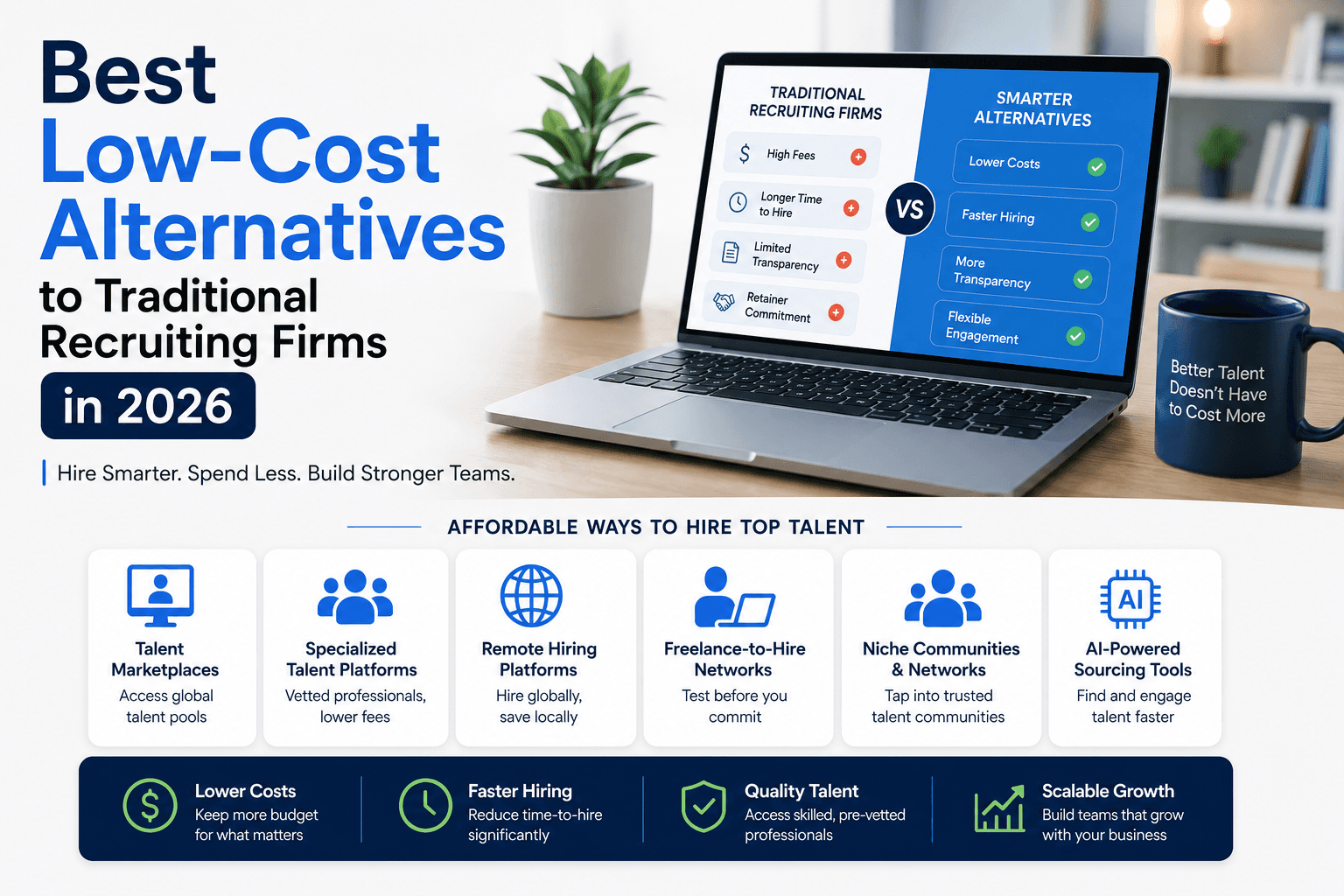

Every remote hiring platform promises the same thing: speed, quality, and a painless process. Most deliver maybe one of those three. That’s the blunt truth nobody puts on their homepage, and it’s the reason so many founders end up cycling through three different services before they find one that doesn’t waste their week.
If you’re trying to fill a role right now, here’s the direct answer before anything else: there is no single “best” remote hiring platform in 2026. There’s a best platform for your situation, depending on whether you need one senior engineer by Friday, a distributed team of ten within a quarter, or a customer service hire who won’t ghost after two weeks. This piece breaks down the major players, how they actually differ in vetting and pricing, and how to pick without getting burned.
The remote hiring landscape has quietly split into three camps. You’ve got curated talent marketplaces, AI-native sourcing tools, and the old guard of recruitment agencies still doing things the traditional way, just with a Slack channel bolted on. Knowing which camp a platform belongs to tells you more about fit than any glossy homepage ever will.
Best Remote Hiring Platforms at a Glance
Short on time? Here’s the quick summary:
IMÒ Talent – Best for startups and SMEs that want pre-vetted remote talent within 72 hours at predictable flat monthly pricing.
Paraform – Best for hiring hard-to-fill technical and executive roles through a network of specialist recruiters.
Toptal – Best for companies that need elite freelance developers, designers, and finance professionals for high-impact projects.
Turing – Best for scaling remote engineering teams using AI-powered sourcing and technical vetting.
Andela – Best for businesses building long-term distributed engineering teams with managed talent support.
Arc.dev – Best for hiring experienced remote software developers for permanent or contract roles.
AI-native recruiting services – Best for organizations that want faster sourcing while keeping human recruiters involved in final hiring decisions.
Manatal – Best budget-friendly ATS with AI recruiting features for growing businesses managing hiring in-house.
SeekOut – Best for sourcing highly specialized, passive, and hard-to-find technical talent.
Workable – Best all-in-one recruitment platform for small and mid-sized businesses that want ATS, sourcing, and interview management in one place.
IMÒ Talent
IMÒ Talent sits in that first camp, and it’s worth starting here because it illustrates the whole comparison in miniature. It’s a curated marketplace, not an Employer of Record, not a freelance free-for-all like Upwork. The distinction matters more than people think.
Where an EOR service handles legal employment and global payroll infrastructure, IMÒ hands you vetted candidates and lets you manage the actual employment relationship yourself. Speed is the headline feature here: roughly 72 hours to hire, compared with one to two weeks for a typical EOR setup. Pricing runs flat, somewhere between £300 and £400 a month per hire, rather than the per-employee fee-plus-salary structure most EOR services charge.
Compared with a recruitment agency, the cost savings are the real story. Founders assembling a distributed team through IMÒ report savings of 60 to 70 percent against domestic hiring costs, largely because you’re skipping the executive search fees and the months-long recruitment process that traditional agencies drag out. The tradeoff is that compliance sits with you, the client, rather than being handled end-to-end the way it would through an EOR. Fine if you’ve got HR capacity. Less fine if you haven’t.
Paraform

Paraform flips the recruiter model on its head. Instead of one agency working your role, AI agents match your open position with a network of independent, specialised recruiters who then compete for the placement, usually on contingency at 20 to 25 percent of first-year salary.
Think of it as the Uber of executive search, except the surge pricing works in your favour. It’s built for high-growth AI and tech roles where the best candidates aren’t scrolling LinkedIn, they’re sitting in some recruiter’s warm network that took years to build. Companies like Palantir use it for exactly this reason. If you’re hiring a run-of-the-mill customer service rep, this is overkill. If you’re hunting for a machine learning lead who doesn’t apply to job boards, it’s arguably unmatched.
Toptal
Toptal has been the gold standard for freelance vetting long enough that its reputation now does half the marketing. The pitch is access to the top 3 percent of applicants, filtered through a screening process that’s genuinely brutal by industry standards.
The value shows up in onboarding, or rather, the lack of it. You skip the ramp-up period because Toptal’s freelancers are already used to parachuting into remote teams and producing from day one. It’s expensive, no question, but for short-term senior engineering work where a bad hire costs you a sprint, the ROI usually justifies it.
Turing
Turing leans hard into automation. AI does the sourcing and vetting, primarily through coding tests and video interviews, matching software engineers to US companies at scale.
It’s a strong sourcing tool if you’re building a remote engineering team out of Eastern Europe or Latin America and want volume without sacrificing a baseline of quality. Where it stumbles a bit is speed on the sales side; the high-touch onboarding process for companies can be slower than a pure marketplace model like Paraform’s. Solid for mid-level developers. Less proven if you’re after the outlier hire.
Andela

Andela built its name sourcing and managing distributed team recruiting out of Africa, and it’s the platform to consider when you need a team, not just an individual.
The HR logistics, workforce management, and onboarding are handled for you, which matters if your internal recruiting headcount is thin. What’s underrated about Andela is the community angle: developers who feel part of something retain better than the average freelancer bouncing between marketplaces. Retention is the quiet metric everyone forgets to compare, and it’s where Andela edges out platforms built purely for one-off placements.
Arc.dev
Arc.dev occupies the middle ground between a fast-moving freelancer marketplace and a slow, traditional recruiter grinding through a shortlist. It focuses on senior developers, usually for permanent, fully remote roles.
The vetting doesn’t stop at code quality. Arc screens for autonomy, which is the trait that actually determines whether someone thrives on a distributed team versus someone who needs an office and a manager hovering nearby. That’s a meaningfully different filter than what Turing or Toptal prioritise, and it’s why Arc tends to produce better long-term hires for companies that are remote-first by design, not remote by accident.
AI-native recruiting services
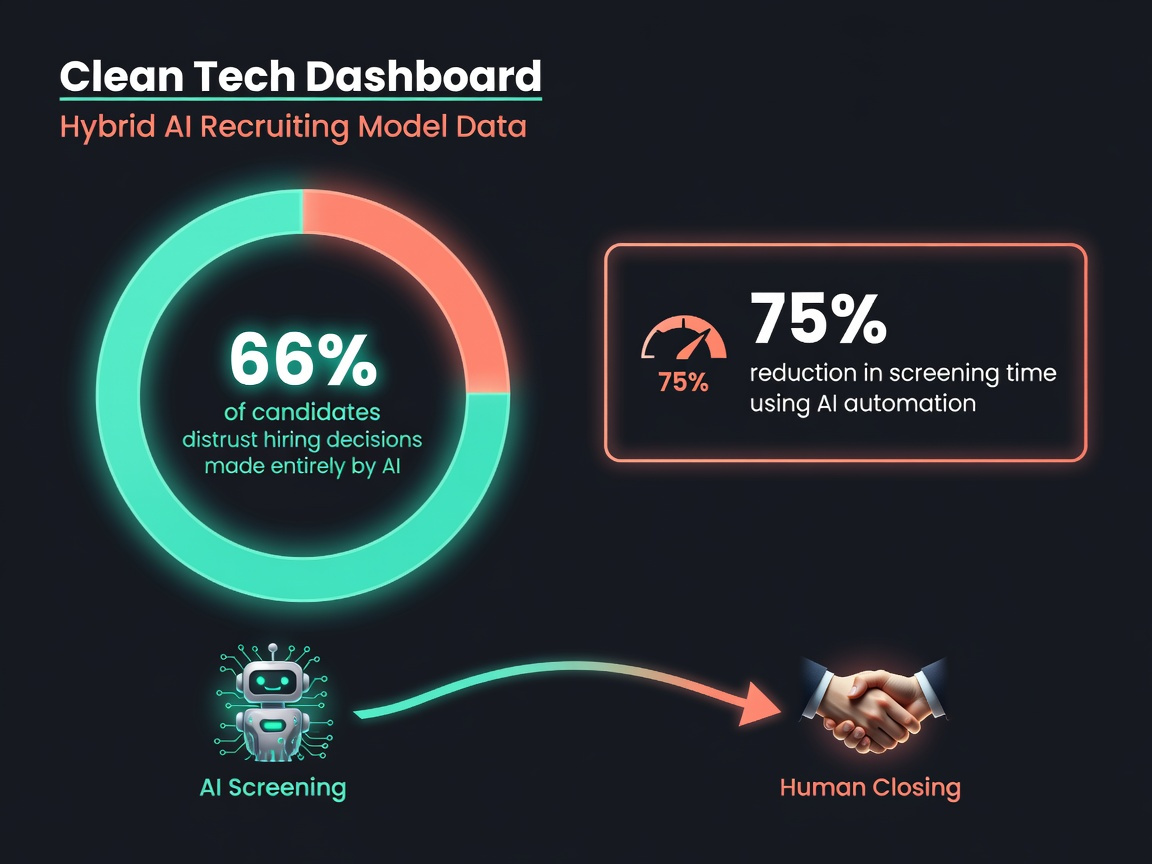
This is the emerging class, and it’s worth watching closely. These are service providers using proprietary AI for sourcing and screening, but keeping human recruiters in the room for the final pitch and negotiation.
The reasoning is sound. Data from 2026 suggests a majority of candidates, somewhere around 66 percent, distrust hiring decisions made entirely by AI. So these services split the difference: automation handles the grunt work, cutting screening time by roughly 75 percent, while a human closes the deal. It’s a pragmatic hybrid, and frankly, I suspect this model becomes the default across the industry within a couple of years, simply because candidates keep telling recruiters they want a person on the other end of the call.
Free ATS with recruiter marketplace (Manatal)
Manatal represents the budget tier, and there’s nothing wrong with that word here. It’s a modern Applicant Tracking System with built-in AI matching, plus a marketplace layer that lets you tap external recruiters when your in-house team hits a wall.
The catch is that the AI only earns its keep if you actually use the CRM features properly. Feed it social profiles, let it enrich candidate data, and it starts outperforming a traditional ATS at finding passive talent, the kind who aren’t actively applying anywhere. Ignore those features and it’s just a glorified spreadsheet with a nicer interface.
SeekOut

SeekOut exists for the hires nobody else can find. It’s an AI-powered sourcing platform built for niche, diverse, or genuinely hard-to-reach professionals, and its indexing goes places LinkedIn doesn’t bother going.
Patents, GitHub repositories, even security clearance data get folded into its search. That makes it the platform of choice for deep-tech or hardware roles where the pool of qualified candidates might be a few hundred people worldwide. It’s less useful, admittedly, if you’re filling a generalist role where LinkedIn’s sheer volume still wins.
Workable
Workable is the safe choice, and I don’t say that as a knock. It bundles ATS, sourcing, and interview scheduling with AI tools into one system, aimed squarely at small and mid-sized companies tired of stitching five different tools together.
The value proposition is consolidation. If you’re currently paying separately for scheduling software, a video interview tool, and a basic sourcing platform, Workable’s all-in-one approach usually comes out cheaper and less of a headache to manage. It won’t dazzle you with a specialised recruiter network the way Paraform or SeekOut might, but it’ll run reliably every single week without drama.
How do you choose the right platform for your company size?
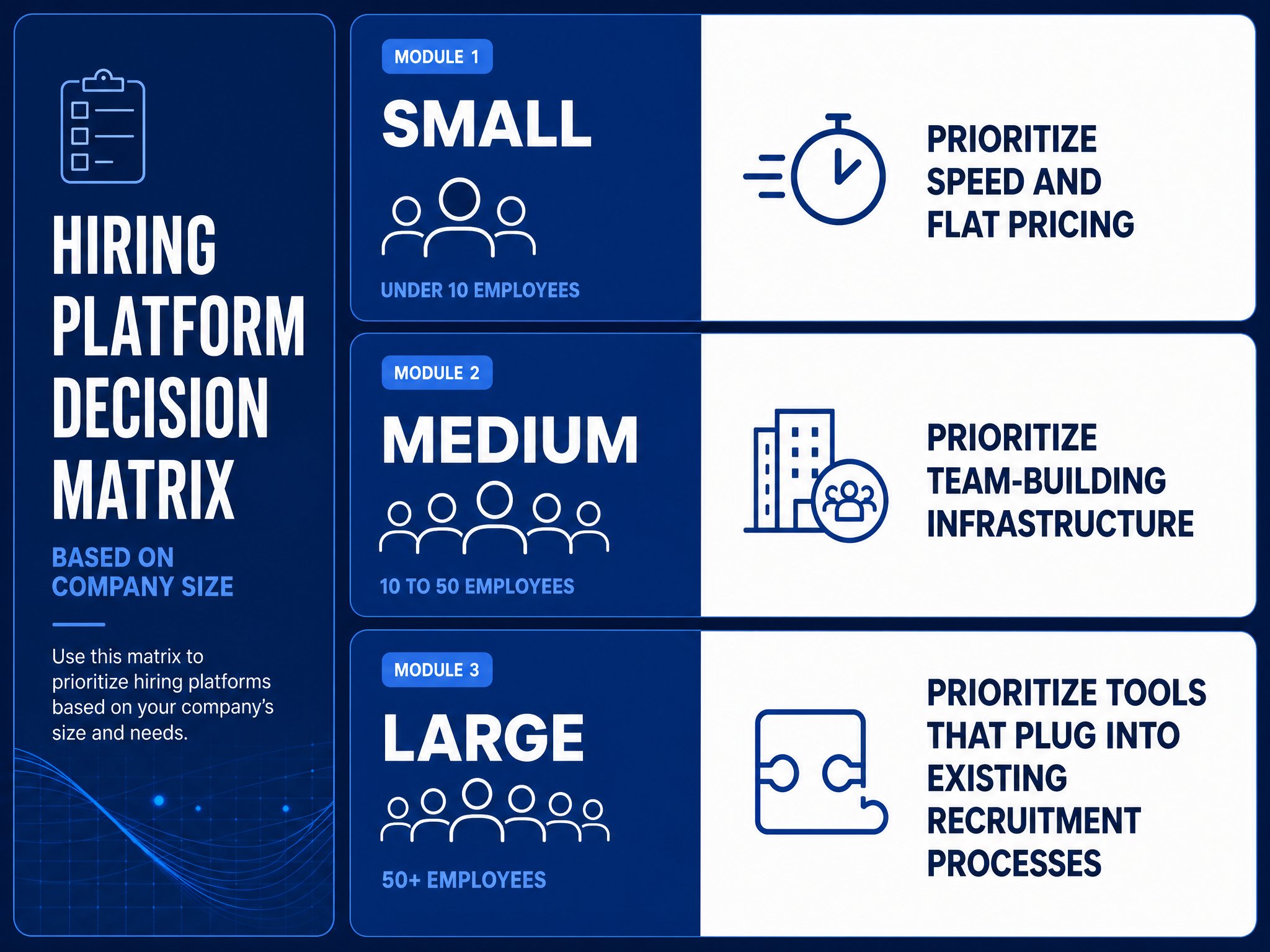
Company size dictates almost everything here, more than budget does, oddly enough.
A five-person startup burning through a seed round doesn’t need an enterprise ATS with a dozen integrations gathering dust. It needs speed and a curated pool, which points toward something like IMÒ Talent or Paraform depending on whether the role is general or deeply technical. A 200-person company scaling an engineering team benefits more from Andela’s managed-team model or Turing’s volume sourcing, because the pain point shifts from “find one great person” to “build a repeatable recruitment process.”
Larger organisations, the ones already running an internal recruiter team, tend to get the most value from tools like SeekOut or Manatal that supplement rather than replace existing staff. A quick way to sort this:
Under 10 employees: prioritise speed and flat pricing over deep customisation
10 to 50 employees: prioritise platforms with team-building infrastructure, not just individual placements
50+ employees: prioritise tools that plug into an existing recruitment process rather than replacing it outright
What is the practical process for switching from one hiring provider to another?

Switching providers is messier than most platforms let on, and nobody warns you about the overlap period.
Start by auditing what’s actually contractual. EOR services and some recruitment agencies lock you into notice periods, sometimes 30 to 60 days, before you can move contractors off their books without penalty. Map every active role, every candidate in the pipeline, and every contractor mid-onboarding before you cancel anything. Run the new platform in parallel for at least one hiring cycle rather than cutting over cold; this protects you from a gap where nobody’s sourcing candidates at all.
Then there’s the human side, which people underestimate. Existing remote staff sometimes get anxious when payroll or contractor management shifts providers, so a short, plain-language note explaining what’s changing (and what isn’t, like their pay date or benefits) prevents a wave of nervous messages landing in your inbox the same week.
How do remote job boards compare to curated hiring platforms?
Job boards and curated platforms solve different problems, and conflating them is where most hiring headaches start.
A board just lists roles. You’re doing the vetting, the outreach, the scheduling, all of it yourself, which works fine if you’ve got recruiting capacity and time to spare. Curated platforms front-load that work through boot camp-style vetting or AI screening, handing you a shortlist of tier candidates rather than three hundred applicants of wildly mixed quality. The tradeoff is obvious: boards are cheaper and give you full control, curated platforms cost more but compress weeks of sourcing into days.
Factor | Remote job boards | Curated hiring platforms |
|---|---|---|
Vetting | Done by you | Done for you (screening, tests, interviews) |
Speed | Slow, self-managed | Fast, often under a week |
Cost | Low or free listing fees | Flat fee or percentage of salary |
Best for | Companies with recruiting staff and time | Lean teams needing quality fast |
If you’ve got the internal bandwidth and enjoy sifting through applicants yourself, boards remain a legitimate option. Most founders I’ve spoken with don’t have that bandwidth, which is exactly why curated platforms keep eating market share from traditional job boards year over year.
Conclusion
None of these platforms is objectively superior. That’s the uncomfortable answer, but it’s the honest one. IMÒ Talent wins on speed and flat pricing for lean teams. Paraform wins when you need a specialist nobody’s found yet. Toptal wins when a bad hire costs more than a premium fee. Andela wins when you’re building a team, not filling a seat. The mistake isn’t picking the “wrong” platform, it’s picking one without being honest about what your company actually needs this quarter, not what sounded impressive in a pitch deck six months ago.
FAQ
Is IMÒ Talent an Employer of Record? No. It’s a curated talent marketplace, not a legal employment provider. Compliance and payroll handling stay with the client rather than being absorbed the way an EOR service would manage it.
Which platform is cheapest for a small startup? Flat-fee marketplaces and budget ATS tools like Manatal tend to undercut per-employee EOR pricing and traditional agency fees, though the savings shrink once you factor in the time your team spends managing compliance yourself.
Can I use more than one platform at once? Yes, and many growing companies do, running a curated marketplace for specialist roles alongside a broader ATS for general hiring across their engineering team and support staff.
How long does switching providers usually take? Plan for one full hiring cycle of overlap, generally two to four weeks, to avoid gaps in your pipeline while contracts and notice periods wind down.